Common Causes of Roof Leaks & How to Stop Them | Encore Roofing
A brown ring on the ceiling is never where the problem actually is. Water is sneaky — it enters the roof in one place, travels along beams and decking, and shows up somewhere else entirely. That's why chasing a leak yourself is so frustrating, and why a small drip ignored in October can become a soaked ceiling by January. Here are the most common causes of roof leaks, the early warning signs, and what to do about them before winter sets in.
The usual suspects
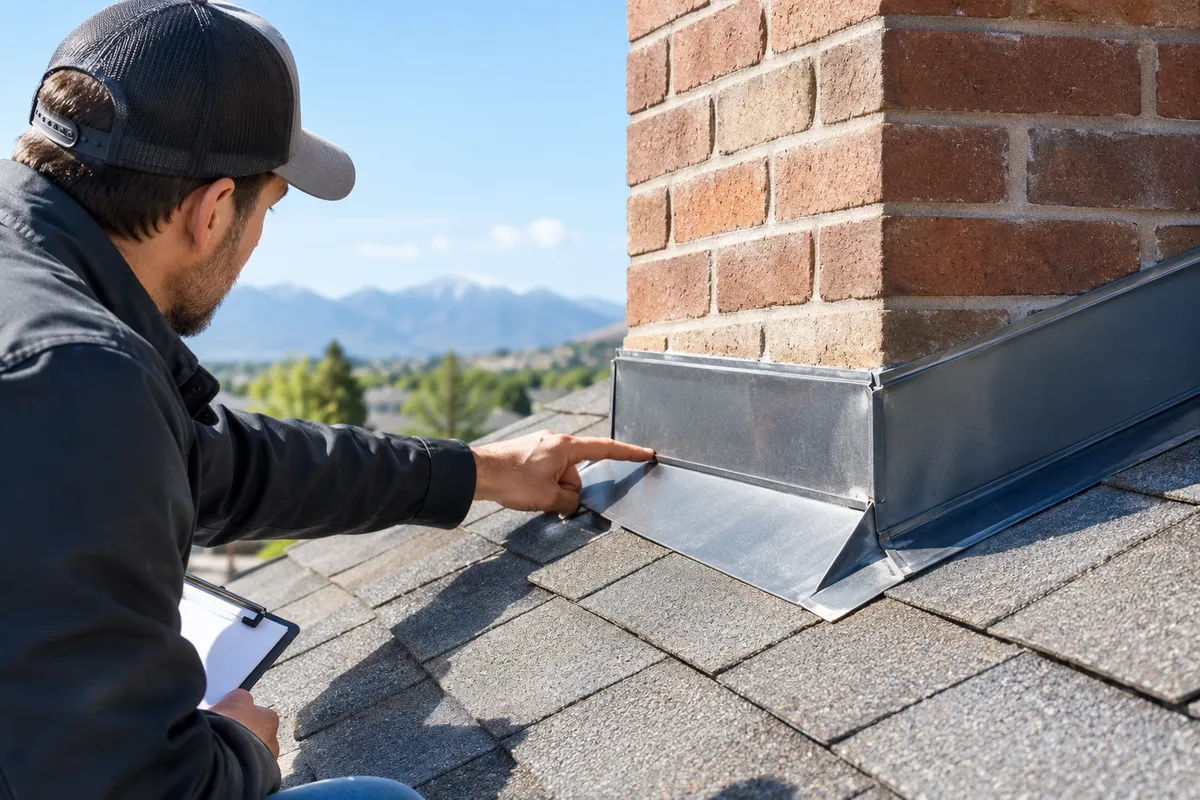
Failed flashing. The metal that seals around chimneys, skylights, vents, and valleys is the number-one source of leaks. When it cracks, lifts, or was installed poorly, water gets in — even if the shingles look perfect.
Missing, cracked, or curling shingles. Wind, hail, sun, and age break down shingles. One missing shingle is an open door for water.
Roof penetrations. Anything that pokes through the roof — vent pipes, exhaust fans, satellite mounts — is a potential entry point where seals fail over time.
Clogged gutters and ice dams. When water can't drain, it backs up under the shingles. In a Utah winter, that backup freezes into ice dams that force water inside.
Worn-out sealant. The caulking and sealant around flashing and penetrations dries, cracks, and fails long before the shingles do.
Age. Sometimes the honest answer is that the roof has simply reached the end of its life and is leaking in multiple places at once.
The warning signs to catch early
Most leaks announce themselves quietly before they flood. Watch for water stains or discoloration on ceilings and walls, peeling paint near the roofline, a musty smell in the attic, damp spots or daylight visible in the attic, and granules from your shingles collecting in the gutters. Catching any of these early is the difference between a simple repair and a major one.
Why you shouldn't just patch it and hope
A dab of sealant on a visible stain treats the symptom, not the source — and because water travels, the real entry point is often feet away from where you see damage. Meanwhile, moisture that keeps getting in rots decking, ruins insulation, and can grow mold inside your walls. A proper repair starts with finding where the water actually enters, which usually takes a trained eye on the roof and in the attic.
Timing matters in Utah
October is the window. Fix a small leak now and it's a quick, inexpensive repair. Let it ride into the freeze-thaw cycles of a Utah winter, and water intrusion plus ice can turn a minor issue into thousands in damage. If you've seen any of the warning signs above, the smart move is an inspection before the first heavy snow — not after the ceiling gives way.
Frequently asked questions
What is the most common cause of roof leaks? Failed or poorly installed flashing — the metal sealing around chimneys, skylights, vents, and valleys — is the most common source, often even when the shingles look fine.
Why is my roof leaking when the shingles look okay? Because leaks frequently start at flashing, penetrations, or worn sealant rather than the shingles, and water travels before it appears inside. The stain is rarely above the actual entry point.
What are the early warning signs of a roof leak? Ceiling or wall stains, peeling paint near the roofline, a musty attic smell, damp spots or daylight in the attic, and shingle granules in the gutters.
Should I repair a small roof leak right away? Yes. A small leak is cheap to fix now but can rot decking, ruin insulation, and cause major damage if it's left through Utah's winter freeze-thaw cycles.
Spotted a leak? Let's find the source before winter
Don't wait for the drip to become a disaster. Call (801) 688-1826 or get your free inspection (https://encoreroofingut.com/quote), and we'll find where the water is really getting in. Encore Roofing has protected Utah homes for 30+ years — contact us (https://encoreroofingut.com/contact) today.
Encore Roofing — Serving Salt Lake, Davis, Weber, Utah, Wasatch & Summit Counties — (801) 688-1826.


