Ice Dams on Your Roof: Causes & Prevention | Encore Roofing Utah
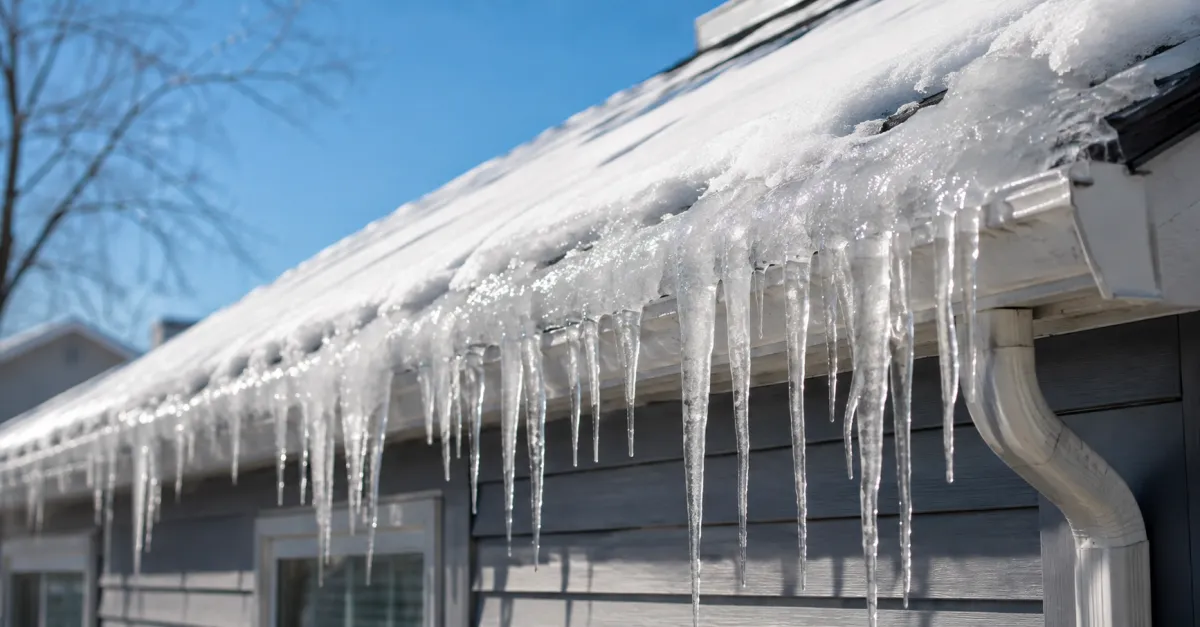
Short answer: an ice dam is a ridge of ice that forms at the edge of your roof and traps melting snow behind it — and that trapped water backs up under your shingles and into your home. Those pretty icicles hanging off the eaves are often the warning sign. Ice dams cause some of the worst winter roof leaks we see in Utah, and the time to prevent them is now, in the fall. Here's how they work and how to stop them.
What actually causes an ice dam
It's not just cold weather — it's uneven roof temperature. Here's the cycle: heat escaping from your home warms the upper part of the roof, melting the snow sitting on it. That meltwater runs down to the cold roof edge (the eaves, which hang past the warm house) and refreezes. Do that over and over, and a dam of ice builds up at the edge. New meltwater then pools behind the dam — and finds its way under your shingles.
The warning signs
Large icicles hanging from your gutters and eaves.
Ice building up along the roof edge or in the gutters.
Water stains on ceilings or walls, especially near exterior walls.
Damp or icy patches in the attic.
If you saw icicles last winter, you likely had the conditions for ice dams — and they're worth addressing before this one.
How to prevent ice dams
Because ice dams come from a warm roof, the fixes are mostly about keeping your roof cold and evenly so:
Attic insulation. Keeping heat in your home (not your attic) is the single biggest factor.
Attic ventilation. Proper airflow keeps the roof deck cold and even in temperature.
Air sealing. Closing gaps where warm air leaks into the attic (around lights, ducts, the attic hatch).
Clean gutters. Clear gutters give meltwater somewhere to go instead of pooling and freezing.
Proper roof details. Ice-and-water barrier at the eaves, installed correctly, is your last line of defense.
Why fall is the time to act
Every one of these fixes is far easier to do before the snow arrives. Once ice dams form, removing them is delicate work — done wrong, it damages the roof — and you're managing a leak in freezing weather. A fall assessment of your insulation, ventilation, and roof edges can head the whole problem off.
Frequently asked questions
Are icicles on my roof a bad sign? They can be. Large icicles along the eaves often signal the melt-and-refreeze cycle that creates ice dams — worth checking your insulation and ventilation.
What's the main cause of ice dams? A warm, uneven roof. Heat escaping into the attic melts snow that refreezes at the cold roof edge. That's why insulation and ventilation matter more than anything.
Can I remove an ice dam myself? It's risky — chipping at ice can damage shingles and gutters, and getting on an icy roof is dangerous. Prevention is far safer and cheaper than removal.
Does a new roof prevent ice dams? A properly built roof with good ice-and-water barrier helps, but insulation and ventilation are just as important. We can assess the whole system.
Stop ice dams before they start
A quick fall assessment can spare you a winter of leaks. Call (801) 688-1826 or request a free inspection (https://encoreroofingut.com/quote). Encore Roofing knows Utah winters — contact us (https://encoreroofingut.com/contact) before the snow flies.
Encore Roofing — Serving Salt Lake, Davis, Weber, Utah, Wasatch & Summit Counties — (801) 688-1826
This article is for general informational purposes only. Every home is different — schedule a professional assessment for advice specific to your roof.


