7 Signs You Need a New Roof vs. a Repair | Encore Roofing
"Do I need a new roof, or can I just repair it?" is one of the most common questions we hear, and it is a big decision. Replace too early and you spend money you did not need to. Wait too long and a failing roof leads to leaks, mold, and damage that costs far more than the roof itself. Here are seven clear signs that it is time for a new roof rather than another patch, and how to tell the difference.
Key takeaways
Age, widespread damage, and repeat leaks are the strongest signs you need a full replacement.
A few of these signs together usually means replacement is the smarter long-term spend.
Isolated, one-off damage can often be repaired. Widespread or structural issues cannot.
A professional inspection gives you an honest repair-vs-replace answer.
1. Your roof is past its age
Age is the first thing to check. A typical asphalt shingle roof lasts about 20 to 25 years, depending on quality, installation, and how hard the climate has been on it. Utah's intense sun and freeze-thaw cycles can shorten that. If your roof is in that age range or older, even if it looks okay from the ground, it is living on borrowed time, and investing in repairs may be throwing good money after bad.
2. Shingles are curling, cracking, or missing
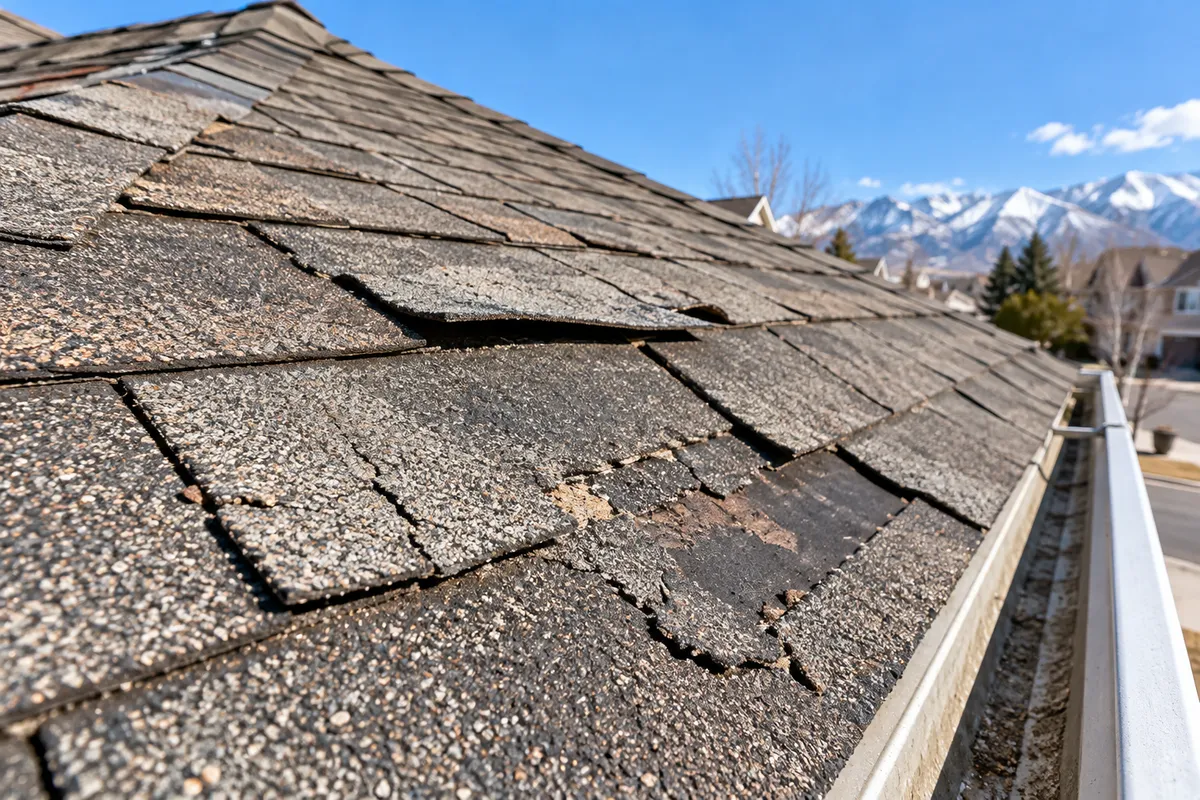
Look at the shingles themselves. Curling edges, cracking, and shingles that have gone brittle are signs the material is failing across the roof, not just in one spot. A few missing shingles after a storm can be replaced. But when curling and cracking are widespread, the whole roof surface is near the end, and patching one area will not stop the rest from going.
3. You are finding granules in the gutters
Asphalt shingles are coated with protective granules. As shingles age, those granules wash off and collect in your gutters, looking like coarse black sand. A little is normal on a new roof. A lot, especially from an older roof, means the shingles are wearing through and losing the protection that keeps water out and UV off the asphalt. Heavy granule loss is a reliable sign the roof is on its way out.
4. The roof is leaking in more than one place
A single leak from a clear cause, like a cracked boot around a vent, is usually a repair. But multiple leaks, or leaks that keep coming back after repairs, tell a different story: the roof system itself is failing. When you are chasing leak after leak, replacement almost always costs less over the next few years than an endless series of patches.
5. You see daylight or sagging from the attic
Go into the attic on a bright day. If you can see daylight coming through the roof boards, water is getting in too. And if the roof deck looks like it is sagging rather than straight, that points to a structural or long-term moisture problem. Sagging is one of the more serious signs and should be looked at by a professional quickly, because it can mean trapped moisture has weakened the decking.
6. Water stains and interior damage
Brown stains on ceilings or upper walls, peeling paint near the roofline, or a musty smell in upstairs rooms all point to water getting past the roof. Sometimes the fix is small. But recurring or spreading stains usually mean the roof has been letting water in for a while, and the damage is adding up in places you cannot see. This is a sign to get an inspection rather than wait.
7. Your energy bills are creeping up
A roof that is failing, combined with poor attic ventilation, lets conditioned air escape and outside temperatures in. If your heating and cooling bills have climbed for no obvious reason, your roof and attic system may be part of the problem. A new, properly ventilated roof often improves comfort and efficiency along with protection.
Repair or replace? A quick gut-check
Use this to get a rough read before you call anyone:
Lean toward repair if: the roof is relatively young, the damage is isolated to one area, and it is the first real problem you have had.
Lean toward replacement if: the roof is near or past its expected age, problems are showing up in multiple places, you are getting repeat leaks, or you see sagging or widespread shingle failure.
Either way: get a professional inspection before you decide. A reputable roofer will tell you honestly when a repair will do.
Frequently asked questions
What are the signs you need a new roof?
The clearest signs are age (20-plus years for asphalt), widespread curling, cracking, or missing shingles, heavy granule loss in the gutters, multiple or repeat leaks, daylight or sagging in the attic, and spreading water stains inside. Several of these together usually means replacement.
Should I repair or replace my roof?
Isolated, one-off damage on a relatively young roof is usually a repair. Widespread damage, repeat leaks, sagging, or an aged-out roof point to replacement, which often costs less over time than endless patching. An inspection gives you the honest answer.
How long does a roof last?
A typical asphalt shingle roof lasts about 20 to 25 years, though Utah's sun and freeze-thaw cycles can shorten that. Quality of materials and installation also make a big difference.
Is granule loss a problem?
A little granule loss is normal, especially on a new roof. Heavy granule loss from an older roof, showing up as black grit in the gutters, means the shingles are wearing out and the roof is nearing the end of its life.
Get an honest answer before winter
If several of these signs sound familiar, it is worth knowing where you stand before winter tests your roof. Encore Roofing gives honest repair-or-replace assessments, never a hard sell. Call (801) 688-1826, request a free quote (https://encoreroofingut.com/quote), or contact us (https://encoreroofingut.com/contact) for an inspection.


